

PoissonLikelihood#
- class deepinv.optim.PoissonLikelihood(gain=1.0, bkg=0, denormalize=True)[source]#
Bases:
DataFidelityPoisson negative log-likelihood.
\[\datafid{z}{y} = -y^{\top} \log(z+\beta)+1^{\top}z\]where \(y\) are the measurements, \(z\) is the estimated (positive) density and \(\beta\geq 0\) is an optional background level.
Note
The function is not Lipschitz smooth w.r.t. \(z\) in the absence of background (\(\beta=0\)).
Examples using PoissonLikelihood:#
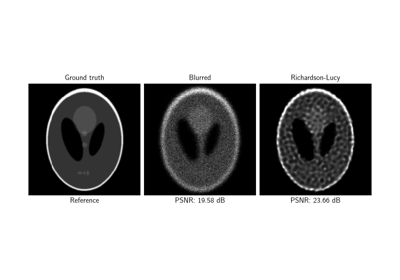

Poisson Inverse Problems with Maximum-Likelihood Expectation-Maximization (MLEM)
Poisson Inverse Problems with Maximum-Likelihood Expectation-Maximization (MLEM)
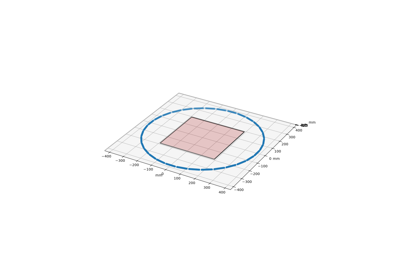
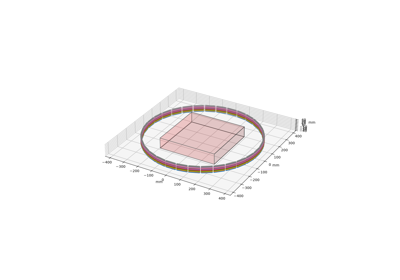
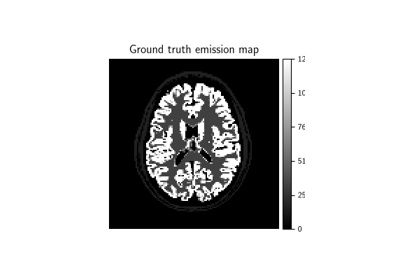
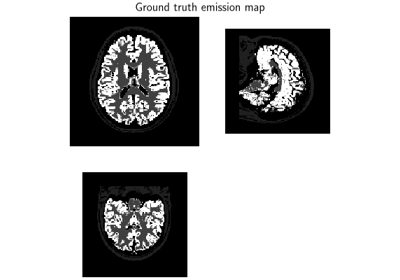

Plug-and-Play algorithm with Mirror Descent for Poisson noise inverse problems.
Plug-and-Play algorithm with Mirror Descent for Poisson noise inverse problems.
